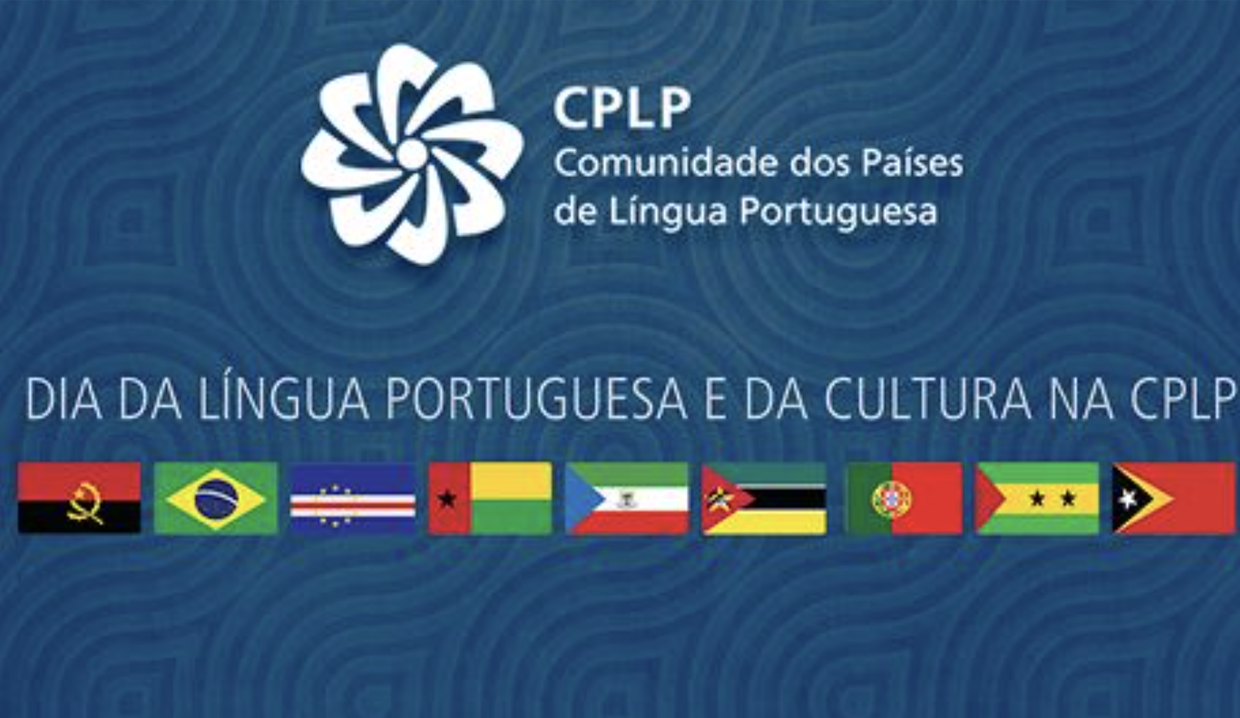
World Portuguese Language Day [Dia Mundial da Língua Portuguesa] is being celebrated today across the globe, recognizing the cultural, historical, and geopolitical importance of one of the world’s most widely spoken languages.
The day is celebrated by cultural and academic initiatives in approximately 50 countries, including conferences, literary events, exhibitions, and educational programs, from Lisbon to Luanda (Angola), São Paulo (Brazil), Macau (China), to Dili (East Timor), and beyond in the diaspora communities across the world.
Marking the occasion, Prime Minister Luís Montenegro said, “The Portuguese language is one of our greatest collective assets—an instrument of dialogue, cooperation, and global presence that unites millions of people across continents.”
Officially proclaimed by UNESCO in 2019, the date builds on an initiative first launched by the Community of Portuguese Language Countries, which has marked May 5 since 2009. The observance underscores a shared linguistic and cultural heritage linking Europe, South America, Africa, and Asia through the Portuguese language diaspora.
Spoken by more than 260 million people worldwide, in Brazil, Portuguese is the most widely spoken language in the Southern Hemisphere and ranks among the top global languages, 6th–7th by native speakers and 8th–9th overall when including second-language speakers.
It is the official language of nine countries—Portugal, Brazil, Angola, Mozambique, Cape Verde, Guinea-Bissau, São Tomé and Príncipe, Timor-Leste, Equatorial Guinea, and Macau.
Portuguese is also used within major international organizations, including the European Union, the African Union, the Organization of American States, and Mercosur, reinforcing its role in diplomacy, trade, and global communication.
On the occasion, Minister of Foreign Affairs Paulo Rangel remarked, “Portuguese is a language of the future, increasingly important in international relations, economic partnerships, and cultural exchange, particularly across the Atlantic and in Africa.”
Minister of Culture Margarida Balseiro Lopes also emphasized its continued expansion, noting that new generations will drive its growth as a platform for innovation. She said, “As new generations embrace the language, Portuguese will continue to grow as a global platform for innovation, knowledge, and cultural exchange.”
In the United States, Portuguese is classified as a “critical language” by federal authorities, with more than 700,000 people speaking it at home, by immigrant communities with roots in Portugal, the Azores, Madeira, Brazil, and Lusophone Africa. Across New England, Portuguese remains one of the most widely spoken languages after English and Spanish, playing a central role in the cultural identity of the Portuguese American community.
Portuguese continues to expand globally and is considered one of the fastest-growing European languages, particularly due to demographic growth in countries such as Brazil, Angola, and Mozambique. Projections suggest the number of speakers could reach around 400 million by 2050 and exceed 500 million by the end of the century. Today, the language is also increasingly prominent online, ranking among the most used languages on the internet and social media platforms.
Established by the CPLP in 2009 and later recognized by UNESCO during its 40th General Conference in 2019, the World Portuguese Language Day affirms Portuguese as a major language of international communication and a global vehicle for science, culture, and diplomacy. As celebrations unfold worldwide, the day serves as both a tribute to a shared past and a forward-looking acknowledgment of Portuguese as a dynamic and growing global language.
The World Portuguese Language Day on May 5th was established by the Community of Portuguese Language Countries (CPLP) in 2009, an intergovernmental organization that has been in official partnership with UNESCO since 2000, to promote the Portuguese language and its cultural heritage. Founded in 1996, the CPLP is an international organization made up of Lusophone countries, where Portuguese is the official language, to promote cooperation and solidarity among its members.
The date was officially recognized in 2019, on the occasion of the 40th session of UNESCO’s General Conference, which officially proclaimed May 5th of each year, as “World Portuguese Language Day” as a “major language of international communication, as well as a global language of science, culture, economics, and diplomacy.”
Carolina Matos/Editor
The Portuguese language belongs to the Romance language family, along with Spanish, French, Italian, and Romanian, with roots in Latin and influences from Arabic, Germanic languages, and indigenous languages of the Americas, Africa, and Asia due to Portugal’s historical colonial expansion. The language has evolved over centuries, resulting in distinct regional variations. The most notable differences are between European Portuguese (spoken in Portugal and parts of Africa and Asia) and Brazilian Portuguese (spoken in Brazil). Portuguese has a rich literary tradition, with renowned authors like Luís de Camões, Fernando Pessoa, Machado de Assis, and Clarice Lispector contributing significantly to world literature.

