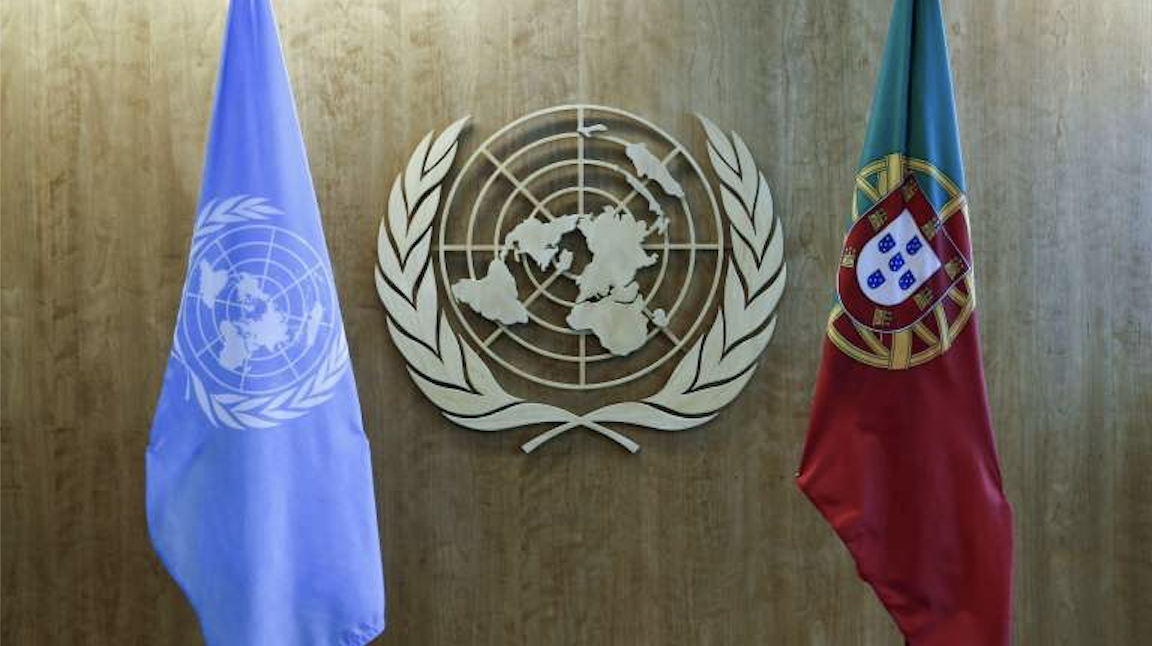
Portugal was elected on Wednesday as a non-permanent member of the United Nations Security Council for the 2027–2028 term, marking the fourth time the country has secured a seat on the UN’s principal body for maintaining international peace and security. Portugal previously served on the Council in 1979–1980, 1997–1998, and 2011–2012.
“We were members of the Security Council in the past, and we are ready to serve the international community,” said Prime Minister Luís Montenegro.
Portugal secured one of the two seats allocated to the Western European and Others Group (WEOG), alongside Austria, defeating Germany in voting by the 193-member UN General Assembly. Portugal received 134 votes, Austria 131, and Germany 104. The new mandate will begin on January 1, 2027.
In a statement highlighting the country’s longstanding commitment to the United Nations, the Portuguese government emphasized that it seeks to contribute to “a Security Council that is fit for purpose: preventing conflict, partnering with all, and protecting peace,” stressing its participation in more than 20 UN peacekeeping missions over the past 65 years and a strong record of support for international cooperation.
Portugal previously served as a non-permanent member of the Security Council in 1979–1980, 1997–1998, and 2011–2012. The election is being viewed as an important diplomatic achievement and an opportunity for Portugal to strengthen its voice on global security issues while representing the interests of both Europe and the wider Portuguese-speaking world.
The Security Council is the United Nations’ most powerful body, empowered to adopt legal resolutions, impose sanctions, authorize peacekeeping missions, and approve the use of force when necessary. It consists of five permanent members with veto power — China, France, Russia, the United Kingdom, and the United States — and ten non-permanent members elected for two-year terms. Portugal will replace Greece on the Council and join Austria, Kyrgyzstan, Trinidad and Tobago, and Zimbabwe as the newly elected members for the 2027–2028 cycle.
The United Nations is led by António Guterres, who has served as Secretary-General since January 2017. A Portuguese diplomat and former prime minister of Portugal, he became the first Portuguese national to lead the organization. Born in Lisbon in 1949, Guterres previously served as Portugal’s prime minister from 1995 to 2002 and later as United Nations High Commissioner for Refugees from 2005 to 2015. António Guterres is scheduled to leave office when his second five-year term ends on December 31, 2026. For Portugal, Guterres’ departure will mark the end of a decade of Portuguese leadership at the United Nations, one of the most prominent international positions ever held by a Portuguese statesman.
PAJ/Staff

