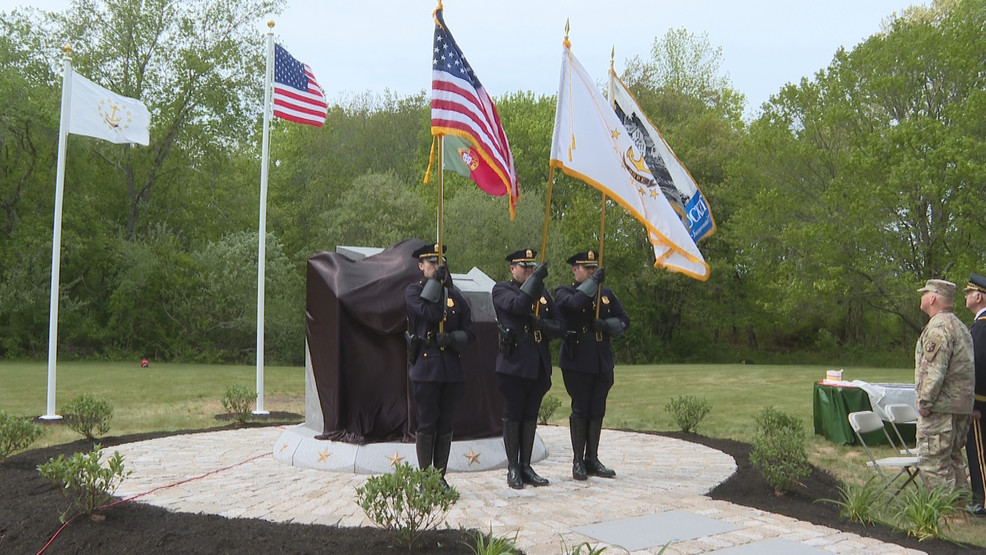
A Memorial Day ceremony honoring Portuguese and Luso-American veterans takes place Monday. May 25, as members of the state’s large Portuguese-American community gather to pay tribute to those who served in the United States Armed Forces.
Memorial Day observances hold special meaning within Portuguese-American communities, many of which trace their roots to the Azores and Madeira.
The observance continues a longstanding tradition of recognizing the contributions and sacrifices made by generations of Portuguese immigrants and their descendants who fought in conflicts ranging from World War II to Iraq and Afghanistan.
Rhode Island is home to one of the nation’s largest Portuguese and Azorean communities, with deep military and civic ties across the Ocean State and southeastern New England.
The ceremony and related commemorations are being promoted by the Rhode Island Day of Portugal Committee, together with Portuguese-American community organizations and veterans advocates. The event also builds on recent efforts to preserve the legacy of Portuguese-American veterans through public memorials and commemorative initiatives.
In 2023, Rhode Island unveiled the permanent Portuguese and Luso-American Veterans Memorial in Exeter, supported through community fundraising and state assistance. At the unveiling, Rhode Island Day of Portugal Committee President Ana Isabel dos Reis-Couto described the memorial as a tribute to those “who paid the ultimate sacrifice protecting this great nation.”
The Portuguese and Luso-American Veterans Memorial honors service members of Portuguese heritage at the Rhode Island Veterans Memorial Cemetery in Exeter, Rhode Island. The granite monument, designed by architect Sid Silveira, features rich cultural and military symbolism.
Across Rhode Island and nearby Massachusetts, Portuguese-Americans have historically served at high rates in the U.S. military while maintaining strong cultural ties to Portugal.
The memorial itself features Portuguese cultural symbols alongside the emblems of the branches of the U.S. military, symbolizing the enduring connection between Portuguese heritage and American service.
Rhode Island is home to one of the largest and most historic Portuguese-American communities in the United States, with deep roots tied primarily to immigrants from the Azores, Madeira, and mainland Portugal.
Portuguese immigration to the Ocean State accelerated in the late 19th and early 20th centuries, as many arrivals found work in fishing, textile mills, manufacturing, and maritime industries in cities such as Providence, East Providence, Pawtucket, Bristol, Warren, Newport, and Tiverton.
Today, Rhode Island has one of the highest percentages of residents of Portuguese ancestry in the country. Census-related estimates place the Portuguese-descended population in Rhode Island at more than 80,000 residents, representing roughly 8–10 percent of the state’s population. Communities such as East Providence, Pawtucket, Bristol, Warren, and Tiverton maintain particularly strong Portuguese and Azorean cultural identities.
The Portuguese-American community remains highly visible in Rhode Island’s cultural, political, religious, and economic life. Annual celebrations such as the Day of Portugal, the Holy Ghost festas, Senhor Santo Cristo festivities, and numerous parish festivals attract thousands of participants each year. Community institutions also maintain strong transatlantic ties with Portugal and the Azores, particularly through cultural exchanges, education initiatives, and diaspora organizations.
PAJ/Staff

