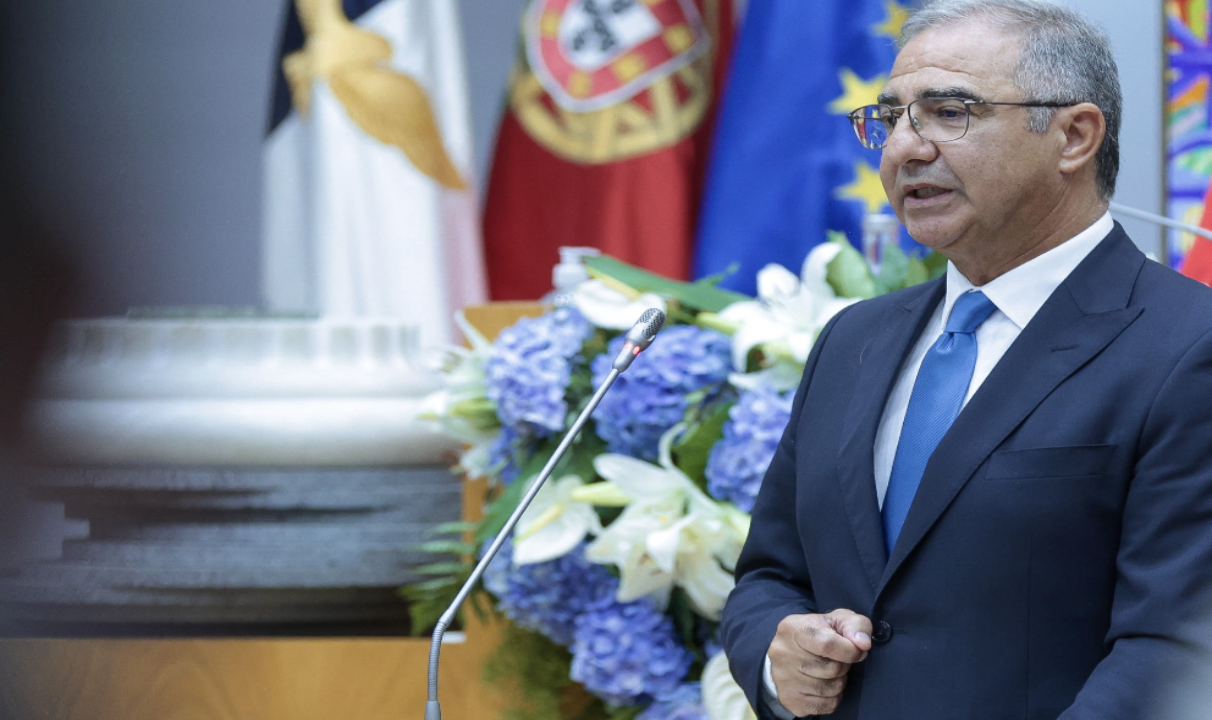
The Autonomous Region of the Azores marked a historic milestone with a Solemn Session on Friday, September 4, at the inaugural session of the Regional Assembly in Horta, Faial, honoring the 50th anniversary of the establishment of self-government.
The Regional Assembly’s first solemn session took place exactly 50 years ago in Horta and was presided over by then-President of the Republic António Ramalho Eanes.
The ceremony brought together regional and national leaders to commemorate one of the central institutions of the new political and administrative autonomy granted to the Azores under Portugal’s 1976 Constitution.
On the occasion, the President of the Regional Government, José Manuel Bolieiro, remarked that the autonomy gave Azoreans both the freedom to make their own decisions and the responsibility that accompanies self-government.
The objective, he said, is to “transform geography into opportunity” and establish the Azores as an “innovative, sustainable and relevant” region in the Atlantic. He emphasized that political autonomy is built on pluralism, stressing that preparing the Region for its next 50 years is the responsibility of the present generation.
The President of the Legislative Assembly, Luís Garcia, placed particular emphasis on the strategic importance of the archipelago, declaring that the “Azores are the greatest geostrategic and geopolitical asset of Portugal.”
Garcia claimed that the islands should not be viewed as condemned by their geographic limitations and that there are today more reasons to believe in the future of the Azores. Their Atlantic location should be regarded as an advantage for Portugal and Europe, particularly at a time when transatlantic security and geopolitical questions have assumed renewed importance.
Paying tribute to the deputies of the first legislature, when the pioneers of 1976 faced a new responsibility without an established Azorean parliamentary tradition to guide them. “There was a new responsibility and the need to exercise it,” Garcia said of that founding generation.
“We have to continue without wavering,” and that. “We want more and better Autonomy, with more resources so that it can fulfill its purposes here in this insular Portugal,” he said.
Representing Portugal’s national institutions at the ceremony, José Pedro Aguiar-Branco, President of the Assembly of the Republic, described the Regional Autonomy as one of the forces responsible for transforming the Azores over the past five decades.
Aguiar-Branco affirmed that the autonomy “makes a difference in people’s lives,” noting that it helped transform the archipelago, overcome isolation and break longstanding cycles of poverty. Autonomy “is not a finished work,” he said, but rather a project that must continue to be developed and improved.
João Bosco Mota Amaral, the first President of the Regional Government of the Azores, unable to attend the Horta ceremony, marked the anniversary in an interview with RTP Açores, describing September 4, 1976, as a “historic date.” Reflecting on five decades of self-government, Mota Amaral identified “unity among all the islands” as one of autonomy’s greatest accomplishments.
Former President of the Regional Assembly and historian, José Guilherme Reis Leite, acknowledged the achievements of the autonomous system, noting that “centralism has not died,” warning that autonomy continues to encounter limitations and obstacles while reminding younger generations that they will be responsible for shaping its future.
The anniversary commemorations began Thursday, September 3, with a gathering honoring surviving deputies of the First Legislature, paying tribute to Álvaro Monjardino, the first President of the Azorean Parliament, and the first president, Mota Amaral, recognizing the first Assembly and first Regional Government as parts of the same founding moment in the construction of democratic autonomy.
The commemorations will continue as the Azores mark another major anniversary in Ponta Delgada, São Miguel Island, on September 8, 2026, 50 years since the first Regional Government took office. The date marks the formal implementation of autonomy under the Constitution of Portugal, a democratic achievement born in the aftermath of the 1974 Carnation Revolution.
The year-long commemorative agenda has included official ceremonies, academic conferences, cultural festivals, and youth initiatives reflecting on autonomy’s impact on governance, economic development, and Azorean identity.
Carolina Matos/Editor
The Azores (population 250,000) is a region of Portugal composed of nine islands. The archipelago, discovered by Portuguese explorers in the 15th century, became an Autonomous Region of Portugal in 1976. The government of the Autonomous Region of the Azores includes the Legislative Assembly, composed of 57 elected deputies, elected by universal suffrage for a four-year term; the Regional Government and Presidency, with parliamentary legitimacy, composed of a President, a Vice-President, and seven Regional Secretaries responsible for the Regional Government’s executive operations. The Autonomous Region of the Azores is represented in the Council of Ministers of the Central Government by a representative appointed by the President of Portugal. According to the latest US census, over 1.3 million individuals of Portuguese descent live in the United States, the majority of whom have roots in the Azores. It is estimated that over 20,000 US citizens live in Portugal. More @ Political Status of the Azores

